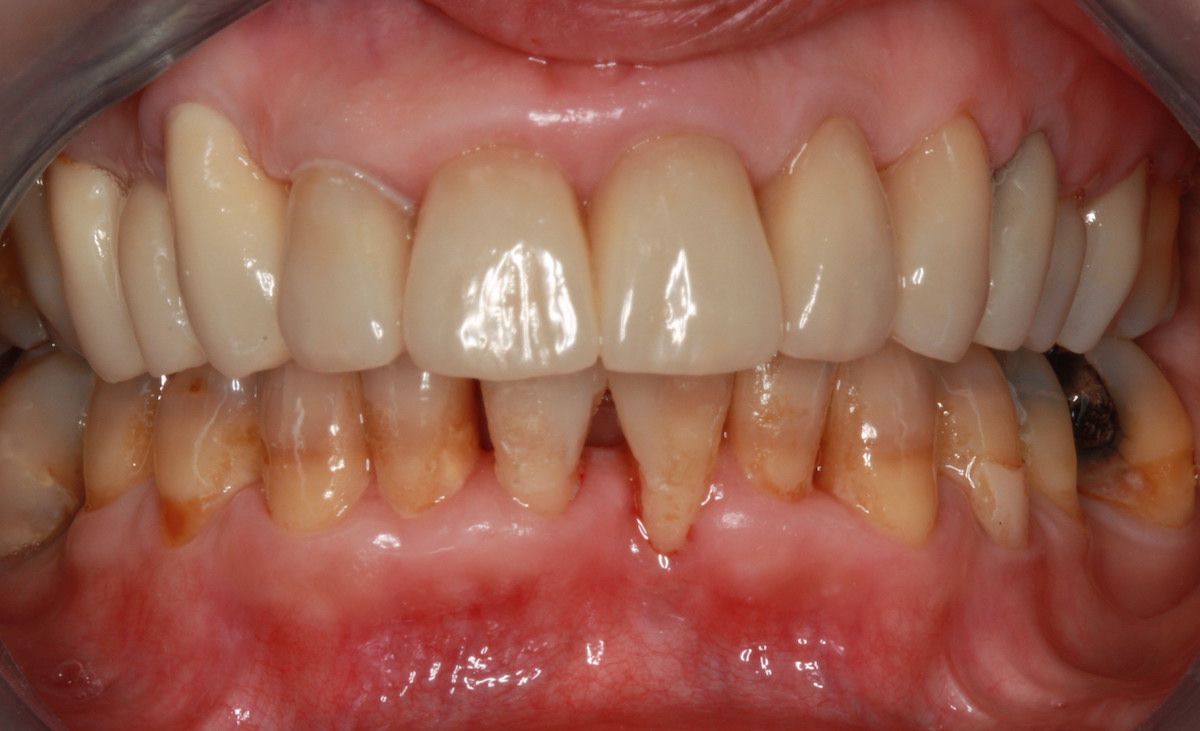
Χαμόγελο ασθενούς με μεταλλοκεραμικές στεφάνες πριν την αντικατάσταση - DentArtistry χαμόγελο ασθενούς με ολοκεραμικές στεφάνες, μετά απο ψηφιακό σχεδιασμό- DentArtistry
Metal-free restorations

Metal-free restorations are modern dental solutions within the field of cosmetic dentistry, aiming to achieve a natural aesthetic result and high biocompatibility. They are used when restorations are required to closely mimic the natural appearance of teeth, without the presence of a metal framework.

The choice of metal-free restorations is ideal when aesthetics, precision of fit, and harmonious integration with natural teeth are key priorities of the treatment.

What Are Metal-Free Restorations?

Metal-free restorations include all prosthetic restorations that are fabricated entirely from ceramic without a metal substructure. These restorations allow superior reproduction of tooth color and translucency and blend more naturally into the smile.
Metal-free restorations include all-ceramic crowns, short-span bridges, as well as more conservative aesthetic treatments such as porcelain veneers and inlays/onlays. Depending on the clinical needs, they can be used for both anterior and posterior teeth.

From Metal-Ceramic to All-Ceramic Restorations

Traditionally, fixed prosthetic restorations were fabricated using metal frameworks covered with porcelain. These materials provided high strength, which until recently was difficult to match with alternative options.
Today, with the use of advanced all-ceramic materials, it is possible to fabricate metal-free restorations with excellent strength and significantly superior aesthetics. These materials allow better reproduction of the natural color and translucency of teeth.

All-Ceramic Materials and Biocompatibility

Certain all-ceramic materials are bonded directly to the tooth structure, creating a strong and durable bond with the dental tissues. This results in high strength and long-term stability of the restoration.
These materials are highly biocompatible and do not trigger allergic reactions, making them suitable for patients with increased sensitivity or concerns regarding metal use.

Which All-Ceramic Materials Are Used?

The most commonly used all-ceramic materials today are lithium disilicate and zirconia.
Lithium disilicate bonds excellently to tooth structure and is mainly preferred for anterior teeth. It is used for porcelain veneers, crowns, and short-span bridges in the front region of the mouth. Although its strength is lower than that of zirconia, it offers exceptional aesthetic results.
Zirconia is an all-ceramic material with very high strength and is used for the fabrication of crowns in both anterior and posterior teeth. It is also used for short-span bridges in the posterior region, where mechanical demands are higher.

When Are Metal-Free Restorations Used?

All-ceramic materials can be used both for first-time restorations and for the replacement of existing metal-ceramic restorations, when aesthetic outcomes or biocompatibility are no longer satisfactory.

The Role of Digital Dentistry

The widespread use of all-ceramic materials has been significantly enhanced by advancements in Digital Dentistry. Teeth can now be digitally scanned, and restorations can be precisely designed using computer software.
Fabrication is carried out using high-precision milling machines, which process industrially manufactured material blocks with excellent physical properties, high strength, and outstanding biocompatibility.

BEFORE and AFTER

Clinic cases that have been restored with metal-free prosthetics.

Click on the arrow to the right to see more photos of each case.

Replacement of metal-ceramic crowns with all-ceramic crowns
Replacement of metal-ceramic crowns on implants with all-ceramic crowns and porcelain veneers
Replacement of 4 metal-ceramic crowns with all-ceramic zirconia crowns
All-ceramic restoration in a patient with significant tooth wear
All-ceramic restorations on the posterior teeth
Questions
  1. What Causes the Dark Line Near the Gums That Is Visible in the Smile?

    The dark line near the gums usually appears in teeth that have old crowns or bridges with a metal framework. Metal-ceramic restorations are not noticeable at first; however, over time and with gum recession, the metal margin becomes visible, creating a dark line along the gumline.

  2. How Can I Avoid a Dark Margin Around My New Teeth?

    With the use of modern all-ceramic materials, crowns and bridges can be fabricated without a metal framework. As a result, the margin of the restoration near the gums remains natural, and no dark shadow appears—even if mild gum recession occurs in the future.

  3. How Do Metal-Free Restorations Help Preserve Natural Tooth Structure?

    Certain all-ceramic materials, such as lithium disilicate, bond exceptionally well to natural tooth structure, allowing for minimal removal of healthy tooth tissue during preparation.
    In addition, zirconia restorations offer very high strength even at reduced thickness compared to metal-ceramic restorations. This means that in many cases, less tooth reduction is required to achieve a durable and functional result.

  4. Are Metal-Free Restorations Suitable for All Patients?

    Metal-free restorations can be used in a wide range of cases, but they are not the ideal solution for every situation.
    Their suitability depends on factors such as the position of the tooth in the mouth, the functional forces applied to it, and whether the restoration is supported by dental implants.
    For this reason, the choice of restoration is always made following an individualized clinical evaluation, in order to achieve the best possible aesthetic and functional outcome.

Related Videos
See more videos on the clinic's YouTube channel @DentArtistry
Crowns and Bridges made from zirconia
All-ceramic or metal-ceramic crowns, for your new teeth?