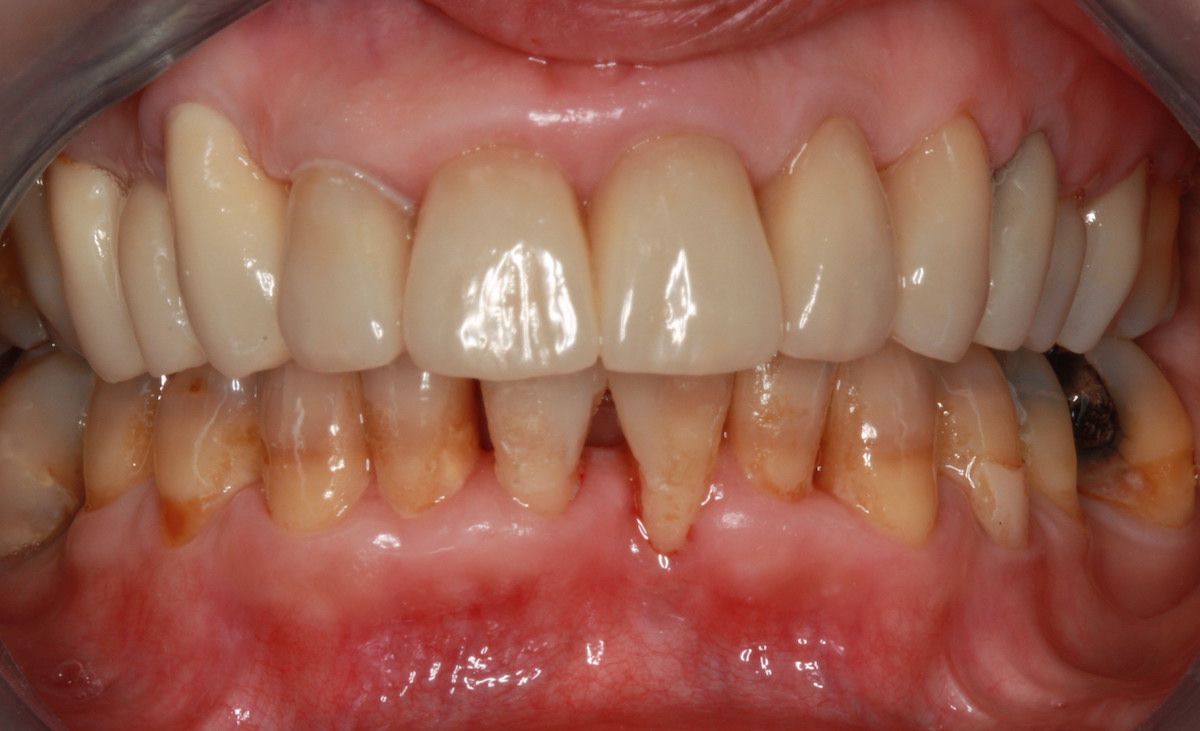
Στεφάνες και γέφυρες δοντιών
Dental Crowns And Bridges

Dental crowns and bridges are prosthodontic restorations used to restore both the function and aesthetics of the mouth.

They are individually designed to harmonize with the natural teeth, providing a stable, natural-looking, and long-lasting result.

What Are Dental Crowns

Dental crowns are permanent prosthetic restorations that fully cover a tooth.

They are indicated when a tooth has been weakened, structurally compromised, or requires reinforcement in order to function properly.

A crown restores the shape, strength, and aesthetics of the tooth, offering protection and long-term stability.

What Are Dental Bridges

Dental bridges are used to restore areas where one or more teeth are missing.

They are fixed prosthetic restorations that re-establish the continuity of the dental arch.

Bridges improve chewing efficiency, speech, and overall smile balance, while also preventing the unwanted movement of adjacent teeth.

Missing teeth can also be treated with dental implants, depending on the clinical indications.

Materials Used for Crowns and Bridges

The materials used in modern prosthodontic restorations are selected based on strength, aesthetics, and biocompatibility.

Advances in technology allow for the fabrication of restorations with high precision and a natural appearance.

Zirconia

Zirconia crowns and bridges combine high mechanical strength with excellent aesthetics.

Zirconia is zirconium dioxide, a ceramic material known for its exceptional durability.

It is a modern option that provides strong and aesthetically refined results and is used for all-ceramic restorations in both the anterior and posterior regions of the mouth.

Lithium Disilicate

Lithium disilicate offers outstanding aesthetics, closely mimicking the natural appearance of teeth.

It is widely used in aesthetic dentistry due to its optical properties, which contribute to excellent final results.

It is primarily indicated for crowns and short-span bridges in the anterior region of the mouth.

Metal-Ceramic (Porcelain-Fused-to-Metal)

Crowns and bridges made of metal and porcelain are still used in clinical practice.

They are particularly useful for large-span prosthetic restorations where additional strength and support are required.

Gallery

Cases that have been treated with  DENTAL CROWNS and BRIDGES at our clinic.
Click the arrow to the right to see more photos of each case.

Crowns, on an anterior and a posterior tooth
Replacement of an old dental bridge
Crowns and bridges on natural teeth
Replacement of metal-ceramic crowns
All ceramic Maryland bridge
Replacement of metal-ceramic crowns with all-ceramic crowns
All-ceramic bridge in a periodontal patient
Questions
  1. What Are Dental Crowns (Caps)?

    Dental crowns and “caps” refer to the same type of restoration.

    Dentists use the term crowns, while patients often refer to them as caps.

    They are small prosthetic restorations that are placed on a tooth after it has been shaped on all surfaces.

    Crowns are used on both anterior and posterior teeth and are indicated when a tooth has suffered significant loss of tooth structure.

  2. I Don’t Want My Tooth to Be Shaped for a Crown. Is There an Alternative?

    If your tooth already has an existing crown, it can only be replaced with a new one.

    If the tooth has not been shaped and is located in the anterior region, its color or shape may be corrected with a porcelain veneer.

    If the tooth is in the posterior region and the appropriate clinical indications are present, an inlay or onlay may be an alternative solution.

  3. What are dental bridges?

    Dental bridges are used to replace one or more missing teeth.

    They are supported by the teeth adjacent to the gap and require the shaping of these supporting teeth in order to create adequate space for the bridge.

  4. I Don’t Want My Teeth Shaped for a Bridge. Is There Another Option?

    Yes. A dental implant can be placed in the area of the missing tooth.

    This approach avoids the need to shape the natural teeth and restores the missing tooth without placing stress on adjacent teeth.

  5. What is a Maryland bridge?

    Maryland bridges are used in the anterior region of the mouth to replace a missing tooth.

    They may be used:

    as a temporary solution before dental implant placement, or

    in young patients who are waiting to reach adulthood before permanent treatment, or

    in periodontal patients who have lost an anterior tooth and do not have sufficient bone for implant placement.

    They consist of a metal or ceramic wing that is bonded to the back surface of the adjacent teeth and do not require tooth preparation.

  6. What Determines the Longevity of Crowns and Bridges?

    The durability of crowns and bridges depends on:

    proper tooth preparation

    accurate fit of the restoration

    high-quality fabrication by the dental laboratory

    Achieving these factors requires meticulous clinical work by the dentist, precise impressions, and appropriate technical support from the dental laboratory.

    Oral hygiene also plays a significant role in longevity.
    In the case of bridges, oral hygiene requirements are more demanding.

  7. How Long Does It Take to Fabricate a Crown or a Bridge?

    At our clinic, crowns are fabricated using a digital workflow and typically require two stages over approximately one week.

    First appointment: tooth preparation, fabrication of a temporary crown, and digital impression

    Second appointment: final cementation, provided no adjustments are needed

    Bridges require an additional try-in stage and are usually completed within 7–10 days.

  8. Is There Anything New in Modern Crowns and Bridges?

    In recent years, we have adopted digital impression technology for the fabrication of crowns and bridges.

    This allows us to deliver restorations with exceptional accuracy and fit.

    At the same time, modern high-strength ceramic materials provide superior aesthetic results compared to older prosthetic solutions.

Related Videos
See more videos on the clinic's YouTube channel @DentArtistry
Metal-ceramic or all-ceramic restorations are better for you?
A no-implant solution for your missing tooth